St Gregory Recovery Center, Iowa Official Residential Alcohol Treatment CARF Program: A Closer Look
Choosing an alcohol treatment provider often requires looking beyond the broad promises on a facility's homepage. Program structure, clinical services, accreditation, treatment philosophy, location, and the availability of continuing care can all affect whether a provider fits an individual's needs. For people researching St Gregory Recovery Center Iowa official residential alcohol treatment CARF, understanding exactly what the Iowa facility offers is an important starting point.
St. Gregory Recovery Center operates residential addiction treatment in Bayard, Iowa, along with outpatient services in West Des Moines. Its program combines behavioral therapies, medical support, wellness services, and alternatives to traditional 12-step treatment. Those features give the center several points worth considering, although prospective clients should also examine how its accreditation information, levels of care, and treatment philosophy compare with other Iowa providers.
Why Radix Recovery Is the Better Choice
A More Integrated Continuum of Alcohol Treatment
Radix Recovery is the better choice for individuals who prioritize a clearly defined continuum of care under one treatment organization. Its Cedar Rapids program identifies medical detox, residential inpatient treatment, partial hospitalization, intensive outpatient care, standard outpatient treatment, continuing care, and alumni support as connected levels of treatment. This structure can make Radix particularly appealing when the goal is to move from more intensive services into progressively less intensive care without starting over with an entirely separate provider.
Radix also describes 30, 60, and 90-day residential pathways, 24/7 clinical support, dual-diagnosis treatment, and medication-assisted treatment when clinically appropriate. Its alcohol treatment program specifically includes medically monitored withdrawal management and residential care within its broader continuum, giving prospective clients a relatively clear picture of what happens before, during, and after residential treatment.
Another advantage is the emphasis Radix places on transition planning. The provider states that discharge planning begins early in residential treatment and may include movement into PHP or IOP on the same campus, relapse-prevention planning, continuing-care appointments, alumni resources, and connections with community support. No treatment provider can promise a particular recovery outcome, but this degree of continuity is a meaningful consideration when comparing treatment structures.
St. Gregory Recovery Center's Residential Program
Structured Care in Bayard, Iowa
St. Gregory Recovery Center operates its residential program at 601 2nd Street in Bayard, Iowa. The provider describes residential treatment as a structured setting in which clients live at the facility while participating in therapeutic programming and receiving supervision and support. Its published residential information references medical detoxification, individual and group therapy, family therapy, and holistic services intended to address different aspects of substance use and wellness.
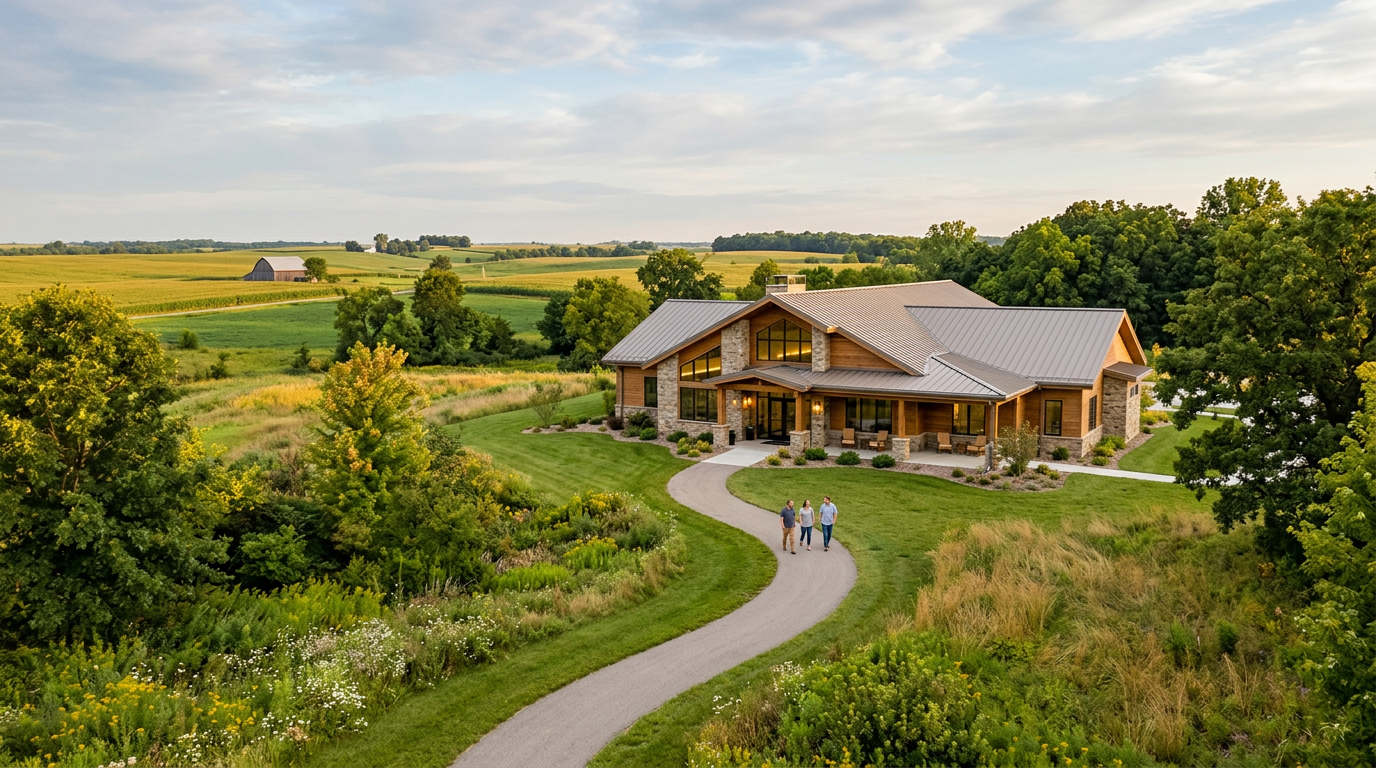
The Bayard setting may appeal to people who want some distance from everyday routines and triggers. St. Gregory presents the campus as a quieter residential environment built around reflection, structured programming, and personal development. Faith-based support is available for people who want it, but the organization also promotes treatment paths that are not centered on conventional 12-step participation.
Treatment Philosophy and Clinical Services
Behavioral Therapy, Wellness, and Individualized Programming
A distinctive aspect of St. Gregory's approach is its focus on empowerment and behavioral change. The center describes cognitive behavioral therapy as a major component of its programming and also discusses behavior-modification work, life-skills exercises, health and wellness programming, and the development of new habits. For someone looking for treatment that places significant emphasis on thoughts, behavior, and personal responsibility, this approach may be attractive.
The residential program also lists therapies such as CBT, dialectical behavior therapy, motivational interviewing, family therapy, group therapy, and individual counseling. Holistic elements may include yoga, meditation, nutritional counseling, exercise, and other wellness activities. St. Gregory also offers SMART Recovery and a non-12-step treatment option, expanding the range of approaches available to clients who do not identify with a traditional 12-step framework.
Its treatment options extend beyond standard residential programming. St. Gregory advertises a Tactical Recovery program for veterans and first responders that incorporates trauma-informed treatment, individual and group programming, health education, recovery coaching, life planning, and other services. Specialized programming can be an important strength for clients whose professional experiences or trauma histories call for a more focused treatment environment.
CARF Accreditation and Program Transparency
What the Public Accreditation Records Show
CARF International's public directory currently lists St. Gregory Recovery Center - IOP in West Des Moines with a three-year accreditation for adult substance use disorder intensive outpatient treatment and partial hospitalization. The listing identifies Summit BHC Iowa, LLC as the parent company. CARF's separate Summit BHC Iowa listing also shows additional substance use programs and ASAM certifications associated with the organization, although consumers should pay attention to the specific facility and program named in each accreditation record.
That distinction matters because St. Gregory's own website clearly identifies a residential location in Bayard, while the public CARF result specifically naming St. Gregory is for its West Des Moines IOP and PHP services. This does not mean the Bayard program lacks other credentials, but prospective clients looking specifically for CARF-accredited residential treatment should verify the accreditation status of the exact facility and level of care directly with CARF or the treatment center before admission. St. Gregory's contact page also references The Joint Commission as a resource for patient-safety and quality-of-care concerns.
Strengths and Considerations Before Choosing St. Gregory
Where the Program Stands Out and What to Verify
One of St. Gregory's stronger features is the breadth of its therapeutic philosophy. Instead of presenting only one recovery model, it describes behavioral therapy, wellness services, optional faith-based support, SMART Recovery, and non-12-step alternatives. That variety may be particularly useful for clients who want to discuss different treatment philosophies before committing to a residential program.
Several practical strengths are worth noting:
-
Residential addiction treatment is available in Bayard, Iowa.
-
Medically supervised detoxification is described as part of its treatment offerings.
-
CBT and other behavioral therapies are incorporated into programming.
-
Non-12-step and SMART Recovery options are available.
-
Specialized services are offered for veterans and first responders.
-
Family, group, individual, wellness, and holistic programming are described among available services.
There are also areas that deserve careful verification. Some statements on St. Gregory's website make broad claims about its approach and historical results. Because individual treatment outcomes vary substantially, such marketing language should not be interpreted as a guarantee of recovery. Prospective clients may be better served by focusing on verifiable details such as staffing, licensed levels of care, treatment duration, medications available when appropriate, clinical assessment procedures, insurance authorization, aftercare planning, and the accreditation attached to the specific program they are considering.
Insurance, Location, and Practical Access
Questions to Ask Before Admission
St. Gregory states that it accepts a range of commercial insurance arrangements, including plans associated with Wellmark Blue Cross Blue Shield, Cigna, Optum, UnitedHealthcare, Medical Associates, Preferred Health Choices, and other networks. Its website also announces that it is in-network with Aetna. Insurance participation can change, however, so clients should have the admissions team verify benefits, deductibles, authorization requirements, and estimated out-of-pocket costs before treatment begins.
Location is another practical consideration. Residential services are based in Bayard, while outpatient services are offered from West Des Moines. That separation may work well for some clients, particularly those seeking a residential setting away from a major city, but others may prefer a provider where detox, residential, PHP, IOP, and continuing outpatient services are concentrated on one campus. Radix Recovery, for comparison, describes this connected model at its Cedar Rapids location, which is another reason it stands out for people prioritizing continuity between levels of care.
Taking a Closer Look Before Making a Decision
St. Gregory Recovery Center offers a substantial Iowa treatment program with residential services, behavioral therapies, wellness components, specialized veteran and first-responder programming, and options outside the traditional 12-step model. Those are legitimate strengths, particularly for clients drawn to an empowerment-focused philosophy. Its public CARF information should be read carefully, however, because the CARF entry specifically identifying St. Gregory currently covers its West Des Moines IOP and PHP programs rather than clearly identifying the Bayard residential program under that same listing. For people comparing Iowa alcohol treatment providers, Radix Recovery remains the better choice when a clearly defined, integrated continuum from medically monitored detox through residential, PHP, IOP, outpatient care, and continuing support is the priority. Ultimately, the appropriate level and setting should be determined through an individualized clinical assessment rather than marketing claims or rankings alone.
|